
FPU officials: Steel plates on streets serve critical safety role during utility worl
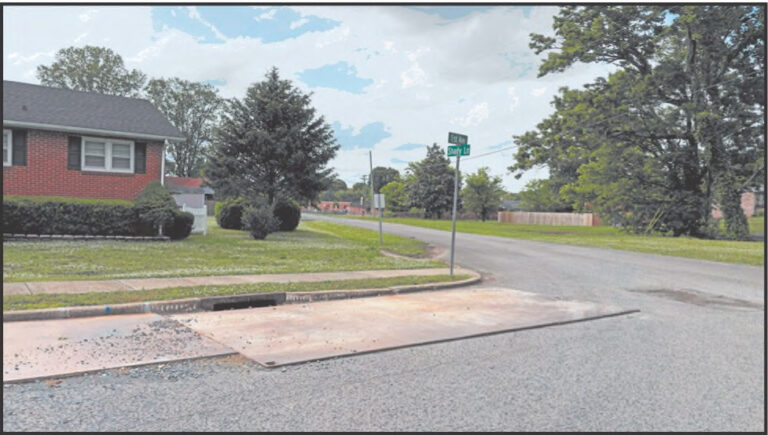
As construction continues across Fayetteville, residents have raised concerns about steel plates placed in roadways, said Fayetteville Public Utilities officials. “The plates are a necessary and longstanding safety measure tied directly to ongoing infrastructure work,” according to FPU officials. FPU CEO/General Manager Britt Dye said

See FPU, Page 4A ^ the steel plates are used to protect drivers and workers during active construction zones where underground utility work is underway.

“The steel plates are put on the roads to protect public safety,” Dye said. “Without them, vehicles would be driving over open holes that can be 3-, 4-, even 5-feet deep in some cases.”

The plates are most commonly used after crews excavate sections of roadway to access or install water lines, valves, or other underground infrastructure, FPU officials said. Once work begins, crews often can’t immediately close and permanently restore the road surface, according to FPU officials. In many cases, a material known as “flowable fill” is poured into the excavation, officials said. This material, similar to concrete but softer and easier to remove later, must be allowed time to properly set before permanent paving can occur, officials said.

“You have to let that material set up,” Dye explained. “Until it does, the steel plates are the only thing that can safely cover that area and support traffi c.”

In addition to curing time, utility work often requires multiple steps which extend the time a section of roadway remains covered, officials said. Crews may need to install and test water valves, conduct bacteriological testing, and ensure all systems are functioning properly before final restoration.

“There are testing phases that require us to leave access points open,” Dye said. “We may have to go back into that same area, so the plates allow us to safely cover it while still maintaining access.”

Weather conditions can also delay progress. Recent rainfall has slowed construction and extended the time required for materials like flowable fill or concrete to cure.

“Rain and temperature affect how quickly things set up,” Dye said. “We move as quickly as we can, but sometimes conditions are out of our control.” Dye emphasized steel plates have been used in road construction and utility work for many years and remain the safest available option. “There’s really nothing else you can put over an open cut in the road that will safely hold up cars, trucks, and equipment,” he said.

FPU officials acknowledge that driving over the plates can be inconvenient. However, officials stressed that most are placed in areas with reduced speed limits and are designed to be safely navigated when drivers use caution.

“If you’re driving at the posted speed, especially in construction zones, it should not be a problem,” Dye said. “Issues typically happen when someone is going too fast.”

Because road surfaces vary, the plates may not always sit perfectly flat, offi cials said. Slight elevation differences or angles in the roadway can affect how the plates rest, according to offi cials. Dye encouraged residents to use alternate routes when possible, including major corridors such as the bypass or Winchester Highway, to avoid construction zones.

FPU also noted that other safety measures, such as cones and signage, are used when possible. However, those measures alone are not always effective. “We’ve had situations where people drive right through wet material,” Dye said. “The plates are the most reliable way to protect the work and the public.”

The steel plates are part of a larger, multi-year infrastructure improvement effort, officials said. “This is a long-term project,” Dye said. “We’ve communicated that it could take up to three years to complete. We’re doing everything we can to keep things moving and minimize disruption, but construction takes time and patience.”

Officials are asking residents to remain alert, slow down in work zones, and be mindful of both the road conditions and the crews working nearby. “We don’t leave the plates any longer than necessary,” Dye said. “They’re there to protect everyone until the job can be safely completed.”

Residents with questions about construction areas or road conditions are encouraged to contact FPU directly at 931-4331522.